 dev dev
A single failed release can freeze sales for hours, and every minute of downtime costs trust. A skilled DevOps engineer stops that story before it starts. Many business owners hear the term and nod without knowing what it means. Some think it is just another name for a system admin. Others believe it is a tool they can buy. Neither idea is correct, and the confusion leads to costly hiring mistakes.
This guide explains the role in plain words. You will learn what a DevOps engineer does each day, which skills matter, how the role differs from similar jobs, and what it takes to build a team. You will also learn the signs that tell you it is time to bring in an agency instead of hiring one more person. The word “DevOps” joins “development” and “operations.”
What Is a DevOps Engineer?
The Simple Definition
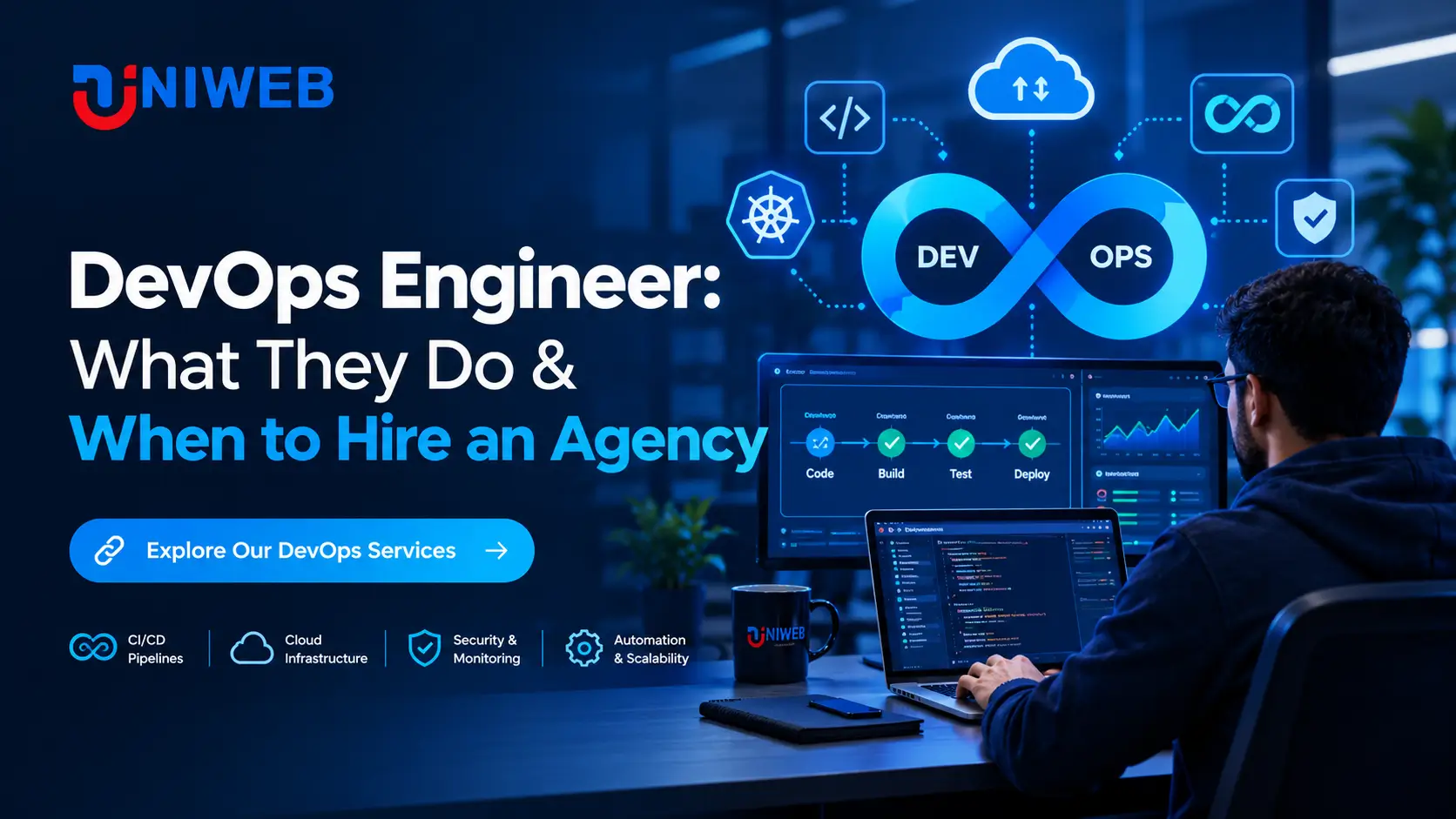
A DevOps engineer is a technical expert who connects software development with IT operations. Developers write code. Operations teams run servers. This expert builds the bridge so code moves from a laptop to a live product quickly and safely.
The word “DevOps” joins “development” and “operations.” It describes a culture and a set of practices, not one tool. The engineer turns those practices into daily work through automation, testing, and monitoring.
Why Companies Need DevOps Engineer
Years ago, developers finished code and tossed it to the operations team. The operations team then struggled to run it. Releases took weeks, and each side blamed the other. The DevOps engineer role fixed that gap. Teams now ship small updates many times a week instead of one giant update every quarter. Smaller releases carry less risk, and problems are easier to find and fix.
What Does a DevOps Engineer Do Every Day?
The daily job changes with company size, but the core duties stay the same. Here are the main areas.
Build and Release Automation
A DevOps engineer creates CI/CD pipelines. CI means continuous integration, where the system merges and tests every code change automatically. CD means continuous delivery or deployment, where tested code reaches users with little or no manual work.
Without a pipeline, someone copies files by hand and hopes nothing breaks. With a pipeline, a code push triggers tests, builds, and a safe roll-out. Tools like Jenkins, GitLab CI, and GitHub Actions handle this work.
Infrastructure as Code
Infrastructure as code, or IaC, means teams describe servers and networks in files instead of clicking through a dashboard. Terraform and Ansible are popular choices.
This approach gives you repeatable environments. If a server fails, the team rebuilds it from code in minutes. It also keeps a history of every change, which helps during audits.
Containers and Orchestration
Docker packs an app and everything it needs into one container. Kubernetes then runs and scales those containers across many machines. Most DevOps engineer job posts list both tools. Containers solve the old “it works on my machine” problem. The app behaves the same in testing and in production, which saves hours of debugging.
Monitoring, Logging, and Incident Response
Launching software is only half the job. Someone must watch it. The engineer sets up tools like Prometheus, Grafana, and Datadog to track speed, errors, and traffic. When an alert fires at 2 a.m., this person leads the response. After the fix, they write a short review so the same failure does not happen twice.
Security Built Into Every Step
Security used to come at the end of a project. Now teams practice DevSecOps, which places security checks inside the pipeline. A modern DevOps engineer scans code for weak points, manages secrets such as passwords and API keys, and sets strict access rules.
Key Skills a DevOps Engineer Needs
Strong engineers combine coding, systems, and people skills. The table below shows the main skill areas and common tools.
| Skill Area | What It Covers | Common Tools |
|---|---|---|
| Version control | Tracking and merging code changes | Git, GitHub, GitLab |
| CI/CD | Automated build, test, and release | Jenkins, GitHub Actions, GitLab CI |
| Cloud platforms | Hosting and scaling apps | AWS, Microsoft Azure, Google Cloud |
| Infrastructure as code | Repeatable environment setup | Terraform, Ansible, CloudFormation |
| Containers | Packaging and running apps | Docker, Kubernetes |
| Monitoring | Tracking health and speed | Prometheus, Grafana, Datadog |
| Scripting | Automating repeat tasks | Bash, Python |
Technical skill alone is not enough. A great DevOps engineer explains problems clearly, listens to developers, and stays calm during outages. Communication often separates a good hire from an average one. Curiosity matters too. Tools change every year, so the best people keep learning and test new ideas in small, safe steps.
DevOps Engineer vs. Similar Roles
Job titles overlap, and that confuses hiring managers. The table below clears it up. A system administrator often works by hand and focuses on stability. A site reliability engineer uses software methods to hit strict uptime goals. A DevOps engineer sits between them and focuses on the full delivery path. In small companies, one person often wears all these hats.
Experience Levels and Career Path
Junior Level
A junior DevOps engineer usually maintains pipelines, fixes small build errors, and follows runbooks written by seniors. This level suits people who know Linux and Git and want to grow.
Mid- and Senior-Level
Mid-level staff design pipelines and manage cloud environments on their own. Senior staff plan the whole platform, set standards, and guide other teams. A senior DevOps engineer also weighs cost, risk, and speed before choosing tools.
Lead and Architect Level
Leads manage teams, while architects design large systems across many clouds. Both roles need strong business sense, because every technical choice affects budget.
Benefits of Hiring an In-House DevOps Engineer
Advantages
An in-house hire knows your product deeply. They attend your meetings, learn your habits, and respond fast. Over time, they build knowledge that stays inside your company. A full-time person also gives you control. You set the priorities, and you shape the culture around releases and quality.
Disadvantages
Good talent is costly and hard to find. Salaries rise fast, and strong candidates often receive several offers. Recruiting can take months. One person also creates a single point of failure. If your only DevOps engineer gets sick or quits, your releases may stop. Nobody else understands the setup, and missing documentation becomes your biggest problem. Finally, one person cannot master everything. Cloud, security, cost control, and Kubernetes each take years to learn.
When to Hire a DevOps Agency Instead
An agency makes sense when your needs are bigger than one person but smaller than a full department. You get a team with different strengths for a planned fee. Want a ready DevOps team instead of a single hire? Uni Web Solutions can help you automate releases and scale with confidence.
Clear Signs You Need a DevOps Engineer
Releases take days instead of hours. Bugs reach customers because testing is manual. Your cloud bill keeps growing, and nobody knows why. Your developers spend more time fixing servers than writing features.
Another sign is risk. If one person holds all the passwords and knowledge, you carry a hidden danger. An agency spreads that knowledge across a team.
Startups and Small Teams
Startups rarely need a full-time senior DevOps engineer on day one. They need a strong setup, fast. An agency can build the pipeline, cloud base, and monitoring in weeks, then reduce its role as the team grows.
Growing Companies With Heavy Traffic
When traffic spikes, weak systems break. Agencies bring experience from many projects, so they have seen your problem before. They know which fixes work and which waste money.
Short Projects and Migrations
Moving to the cloud or switching to Kubernetes is a project with an end date. Hiring a permanent person for a short job wastes budget. An agency finishes the work and hands over clear documents.
In-House vs Freelancer vs Agency
No option wins every time. Many companies start with an agency, learn what they need, and then hire an in-house lead who works alongside the agency. This hybrid model keeps costs steady and protects knowledge.
Common Mistakes When Hiring a DevOps Engineer
Treating DevOps as a Tool
Buying Jenkins or Kubernetes does not give you DevOps. The practice needs a change in how teams work together. Tools only support that change.
Hiring Without a Clear Goal
Some companies post a job with a long wish list of tools. A better start is a clear goal, such as cutting release time from a week to a day. Goals help you judge candidates and agencies fairly.
Ignoring Documentation
Setups that live in one head are fragile. Ask for diagrams, runbooks, and code comments from the first week.
Skipping Security and Backups
Teams often chase speed and forget recovery. Test your backups on a schedule. A backup you never restored is only a hope.
Choosing by Price Alone
The cheapest offer often costs the most later. Poor automation creates outages, and outages cost more than a fair fee.
Expert Tips for Hiring a DevOps Engineer or Agency
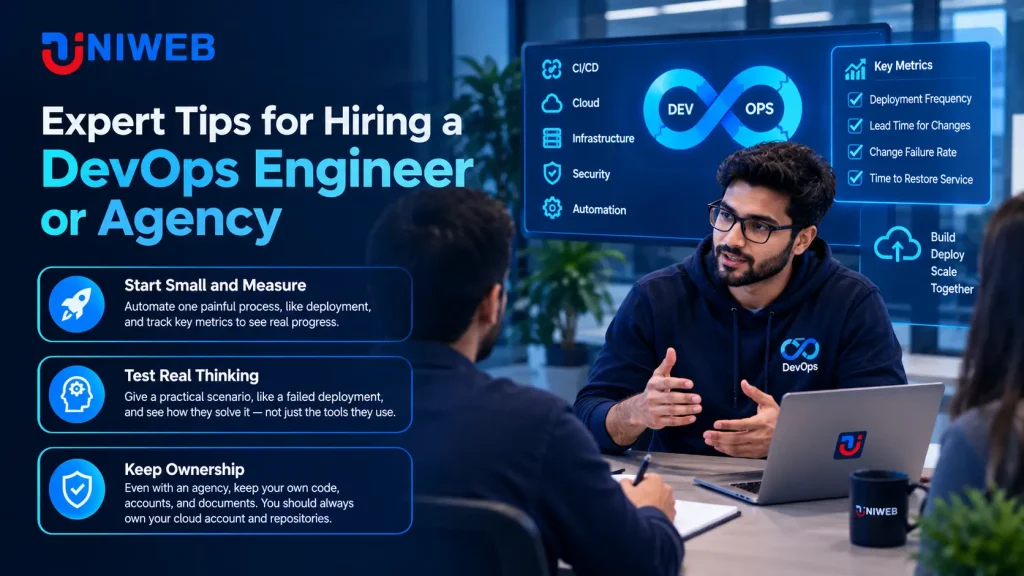
Start Small and Measure
Pick one painful process, such as deployment, and automate it first. Quick wins build trust inside the team.
Four numbers guide most teams: deployment frequency, lead time for changes, change failure rate, and time to restore service. Ask every candidate how they improve these.
Test Real Thinking
Give a candidate a short scenario, such as a failed deployment, and ask how they would respond. A confident DevOps engineer explains steps and trade-offs instead of listing tools.
Keep Ownership
Even with an agency, keep your own copies of code, accounts, and documents. You should always own your cloud account and repositories.
How to Evaluate a DevOps Agency
Look for proof of past results, not only a list of tools. Ask for case studies, references, and sample reports. Check whether the team holds cloud certifications from major providers. Ask who will actually do the work. Some agencies sell with senior staff and deliver with juniors. Request the names and roles of the people on your project.
Review the contract. It should list response times, handover steps, and exit terms. Good agencies train your team and document everything, so you never feel locked in. Finally, check communication. Clear weekly updates and one point of contact keep projects calm.
Related Article: What Is AI Automation & Why Every Business Needs It in 2026
Conclusion
A DevOps engineer turns slow, risky releases into fast, steady ones. The role covers automation, cloud setup, containers, monitoring, and security, so the right person saves time and protects revenue. An in-house hire gives you deep product knowledge and control, but it costs more and leaves a single point of failure.
An agency gives you a full team, quick starts, and flexible terms, which suits startups, growing companies, and short projects.
Start with a clear goal, measure your results, and keep ownership of your accounts. Whichever path you choose, aim for a setup where releases feel boring, because boring releases mean a healthy system. Need expert help with pipelines, cloud setup, and releases? Hire Uni Web Solutions and get a skilled DevOps team without the cost and delay of hiring in-house.
FAQs
What does a DevOps engineer do?
A DevOps engineer automates how software is built, tested, released, and monitored. The goal is faster releases with fewer errors and less downtime.
Do I need coding skills to work in DevOps?
Yes, basic coding helps a lot. Most people use Python or Bash to write scripts, and they read code from developers every day.
How much does it cost to hire a DevOps expert?
Cost depends on location, experience, and cloud knowledge. Senior talent costs much more than junior talent, and an agency fee often replaces salary, benefits, and hiring costs.
Can a small startup skip DevOps?
A startup can delay a full team, but it should not skip the basics. A simple pipeline, backups, and monitoring prevent painful outages as the product grows.
What is the difference between DevOps and SRE?
DevOps focuses on the full delivery path, from code to release. SRE focuses on uptime and reliability targets. The two roles share many tools and often work together.
How long does an agency need to set up a basic pipeline?
Most basic setups take a few weeks, depending on app size and cloud needs. Complex migrations take longer and need a phased plan.
When should I move from an agency to an in-house team?
Move when your workload becomes steady and large enough to keep a full-time person busy. Many companies keep the agency for specialist tasks and hire one in-house lead.